
Aquaponics combines fish farming with soilless plant growing in one recirculating water loop. The fish supply the nutrients, the plants and filter bacteria clean the water, and the water returns to the fish. The central engineering question is how the fish waste, mostly ammonia, gets converted into a form the plants can absorb without any chemical dosing. The answer is a biological process called nitrification, and most aquaponic failures happen when that process is slower than the fish waste it has to handle.
This article explains the nitrogen pathway, why a new system needs time before it is safe to stock, how the biofilter should be designed, and which water conditions keep the process running. It is written for growers and engineers who want to understand the system well enough to diagnose problems, not just follow a schedule.
1. From Ammonia to Nitrate: The Nitrifying Pathway
Fish excrete nitrogen mainly as ammonia, through their gills and in their urine. Ammonia is toxic to fish at low concentrations, so it has to be removed continuously. Two groups of bacteria handle this in sequence. The first, usually Nitrosomonas, oxidises ammonia to nitrite. The second, usually Nitrobacter or Nitrospira, oxidises nitrite to nitrate. Nitrite is also harmful to fish, which means the two steps have to keep pace with each other. If the second step lags, nitrite builds up even when ammonia looks under control.
Nitrate is the form most plants absorb, and it is far less harmful to fish than either ammonia or nitrite. That is why a healthy aquaponic loop is one in which ammonia and nitrite both read close to zero while nitrate rises steadily and is drawn down by the plants.
Figure 1.1 (Illustrative): Nitrogen Species During System Cycling
Illustrative sketch of the general pattern during cycling, not plotted measurements. Ammonia falls first, nitrite peaks as the second bacterial step starts, and nitrate rises once both steps are established. Real timings vary with temperature, feeding and pH, so test your own water.
2. Why Cycling Takes Time
The nitrifying bacteria are slow growers, and they do not appear simply because the water is warm and food is present. They colonise surfaces, and their population grows in response to the ammonia they receive. A new system therefore needs a cycling period before it can carry a normal fish load. During cycling, ammonia is added in small amounts, either from fish food or a pure source, and the water is tested until ammonia and nitrite both fall to near zero within a day of dosing.
Cycling commonly takes several weeks. The exact time depends on water temperature, pH, oxygen level and how much surface area the bacteria have to colonise. Stocking fish too early is the most common cause of a crash, because the first ammonia spike arrives faster than the bacteria can convert it. Patience during this phase is cheaper than replacing fish.
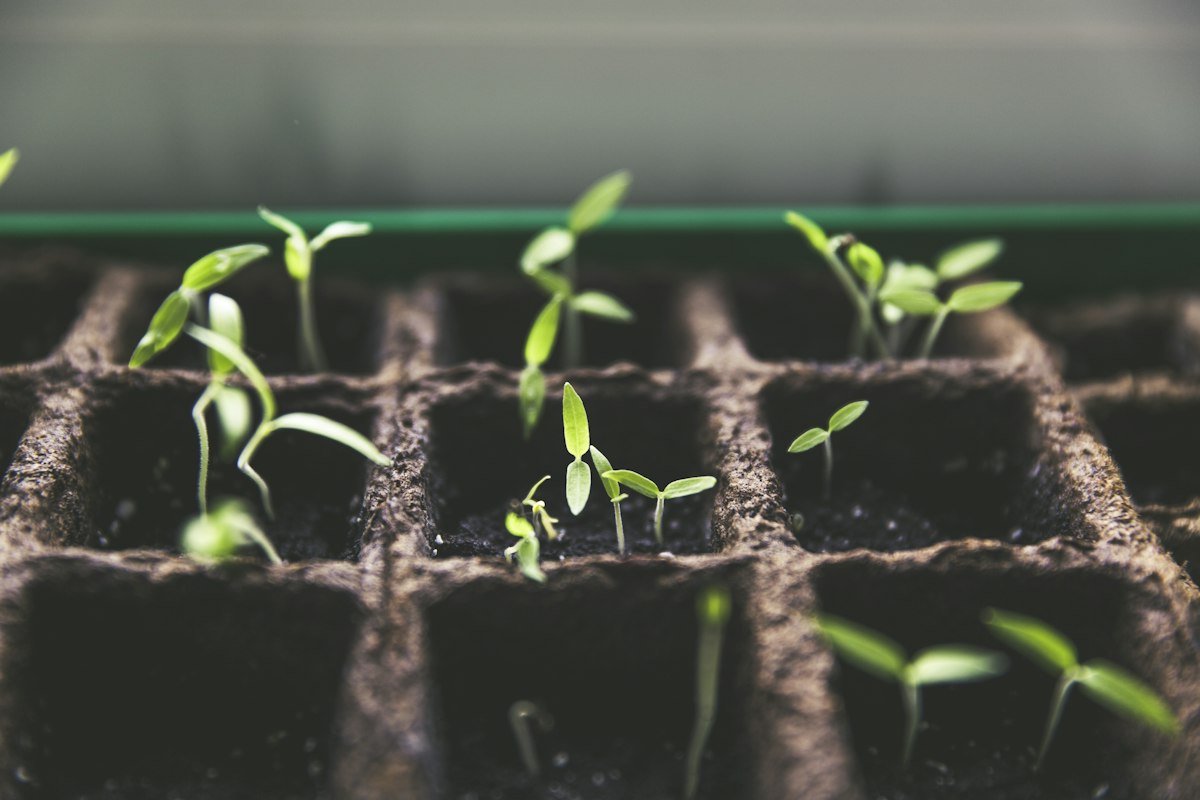
Healthy plants signal a balanced loop. Pale new leaves can point to iron shortage, a common aquaponic issue.
3. Biofilter Design and Surface Area
Because nitrifying bacteria live on surfaces, the biofilter is best understood as a surface area and oxygen supply rather than a container. Media with a high surface area per volume, such as porous rock, lava or structured plastic media, gives the bacteria more room. The same media must also stay well oxygenated, because nitrification is an aerobic process. Dead zones in the filter, where water sits without flow, become places where the bacteria are starved of oxygen and the process weakens.
Flow matters as well. Water has to reach the bacteria at a steady rate, so the biofilter should be fed continuously rather than in occasional large batches. Designing for a stable flow is usually more important than maximising the total media volume.
Figure 1.2 (Illustrative): Nitrification Rate Against Water Temperature
Illustrative curve showing the general relationship described in the text: conversion speeds up with temperature, then slows again near the upper limit. Dashed line: a cooler system with the same bacteria. The curve is not plotted from measured rates.
4. Water Chemistry: pH, Oxygen and Balance
The three conditions that most often stall the cycle are low oxygen, low pH and cold water. Nitrifying bacteria consume alkalinity as they work, so the pH of the loop tends to drift downward over time unless it is buffered. Once pH falls too far, nitrification slows, ammonia accumulates, and the system becomes unstable. Monitoring pH and alkalinity regularly, and buffering when needed, is part of normal operation rather than an emergency measure.
There is also a practical conflict. Fish generally tolerate a wider range of water chemistry than plants, but the bacteria and plants each have their own preferences, and the fish are the most sensitive to sudden change. Most aquaponic guides recommend a compromise near neutral pH, because it suits the bacteria well enough while keeping the plants and fish within workable limits. The best choice depends on the species you grow, so check the requirements for each before setting a target.
5. Water Efficiency and Recirculation
Plants take up water through their roots and release most of it as vapour through their leaves, a process called transpiration. In an aquaponic loop, that water is replaced from the same reservoir rather than lost to soil drainage or runoff, so the system uses far less water than conventional irrigated soil growing. The exact saving depends on the design, the climate, and how much water is lost to evaporation from open tanks, so it should be measured on your own system rather than taken from a headline figure.
Water quality often matters more than volume in these loops. Dissolved solids build up slowly as fish waste accumulates, so a small, regular top-up with fresh water helps keep the balance stable. This is a more reliable guide to system health than the total volume in the tanks.
6. Nutrient Balance and Supplements
Fish waste supplies nitrogen, phosphorus and many trace minerals, but it is not a complete plant diet. Iron is the nutrient most often short in aquaponic systems, because it is less available at the pH levels that suit the bacteria. Potassium and calcium may also need supplementing as plant demand grows. Leaf colour is a useful early signal: pale new leaves often point to iron, while older leaves yellowing first can indicate nitrogen or potassium shortage.
The best practice is to test the water, not guess. A simple test kit for ammonia, nitrite, nitrate and pH, used on a weekly schedule, shows the trend of the system long before a visible problem appears.